Games
Tile Blast
A tile-blasting puzzle game with special blocks, level progression and a polished menu flow.
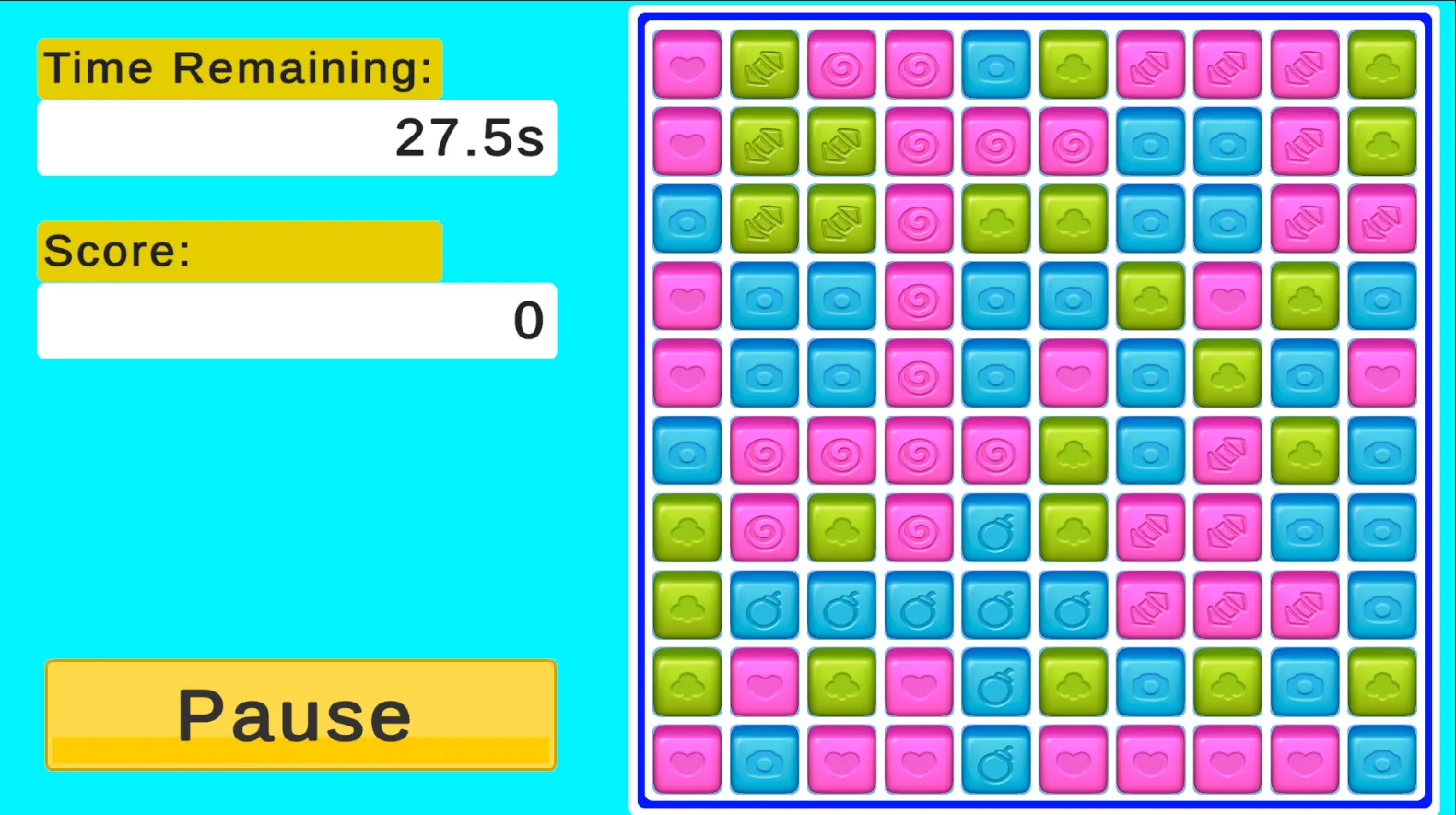
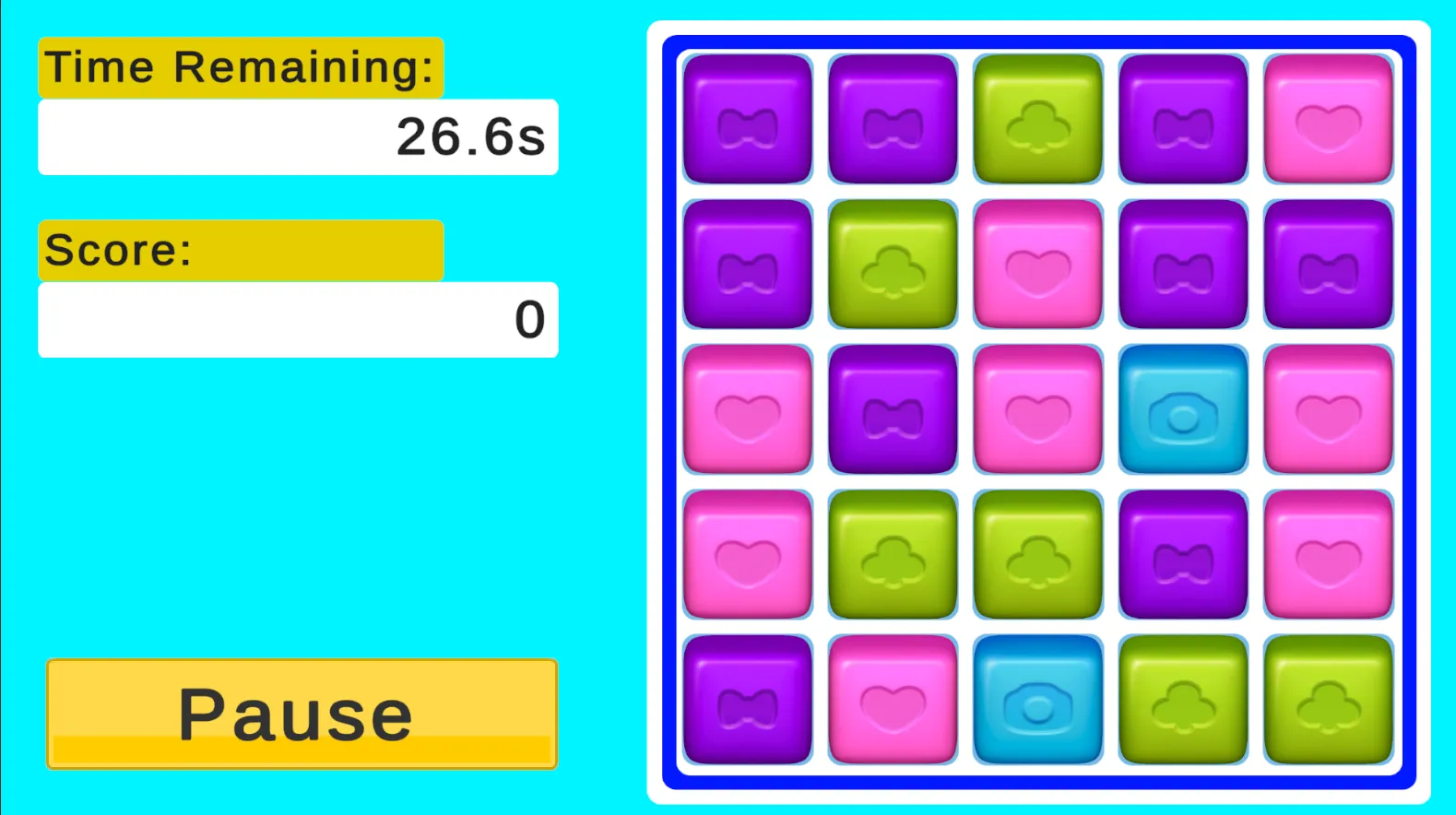
A match-style puzzle game built in Unity. Players tap clusters of same-colored blocks to clear them, while bigger clusters spawn special blocks that clear large parts of the board. Most of the work went into making the game feel responsive: menu flow, feedback on every interaction, and a board that never gets stuck.
Gameplay
- Grid-based board. Generates a board of colored blocks; tapping a connected cluster destroys it and awards points.
- Gravity and refill. Blocks above a cleared area fall into the gaps and new blocks spawn from the top.
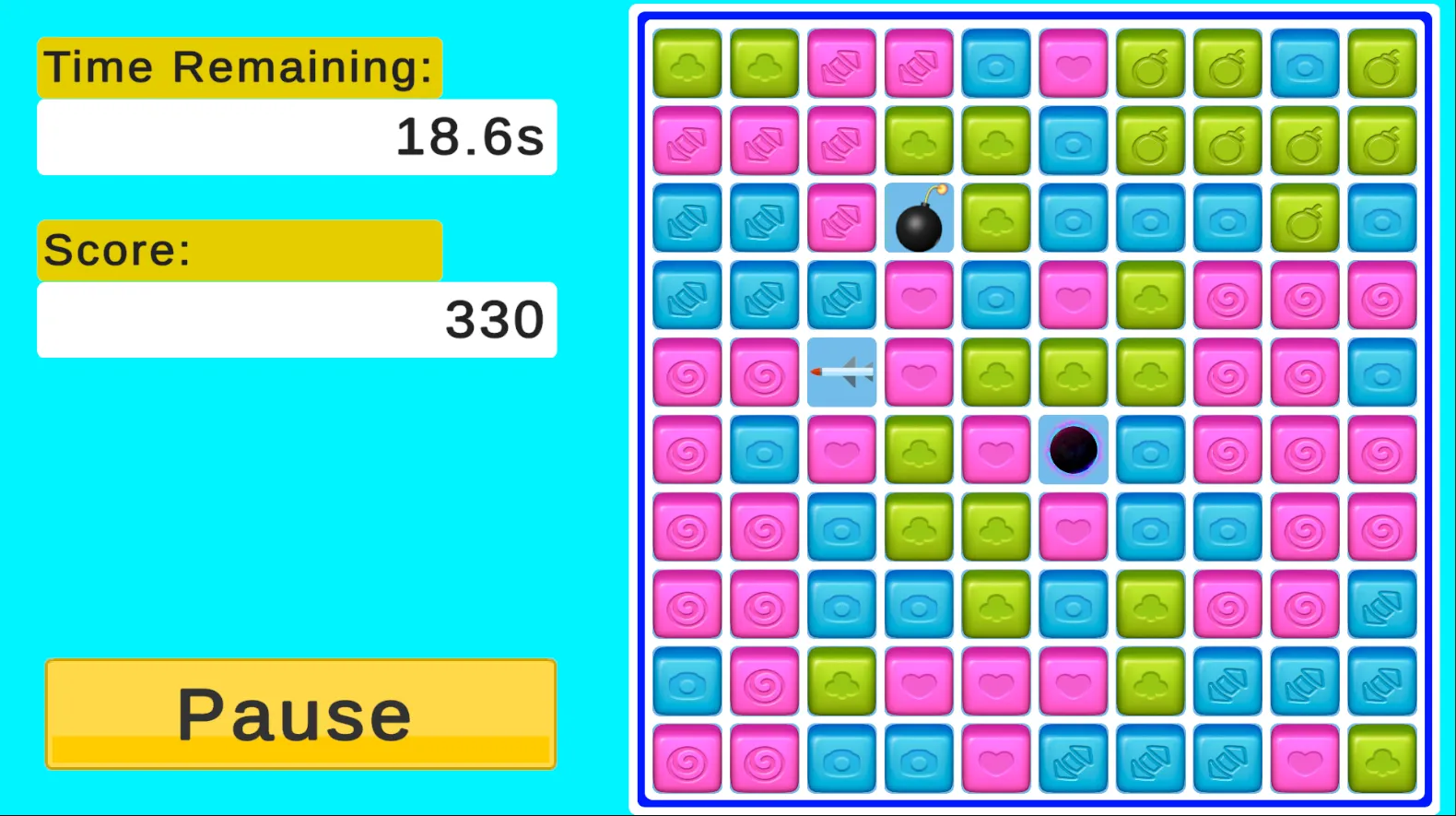
- Special blocks. Large clusters turn into special blocks based on predefined rules:
- Bomb: clears a 3×3 area.
- Missile: clears an entire row or column.
- Black hole: clears the whole board.
- Deadlock prevention. When no valid move remains, the board is automatically reshuffled.
Menus and progression
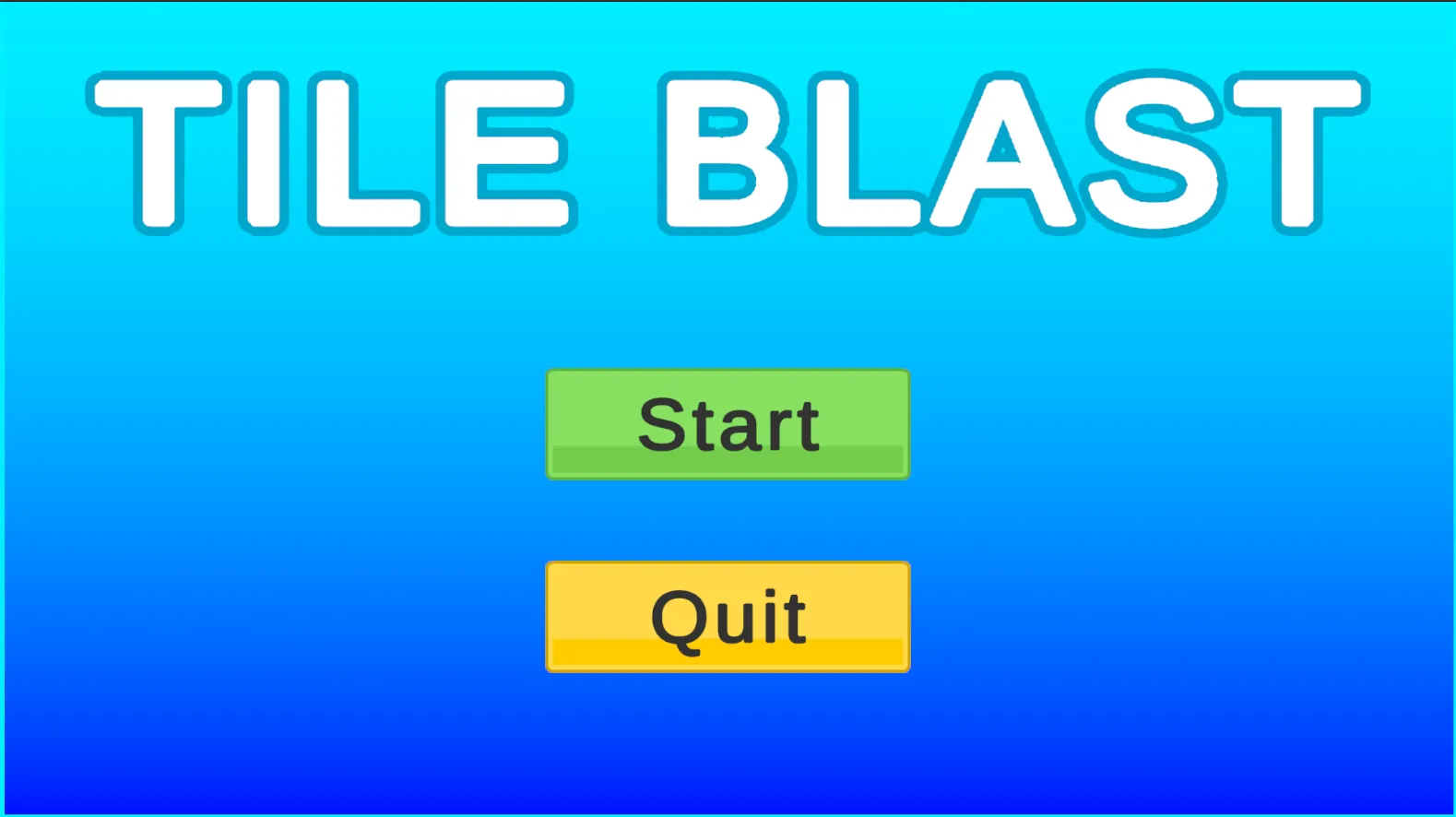
Main menu. Animated Start and Quit buttons with sound effects on hover and click.
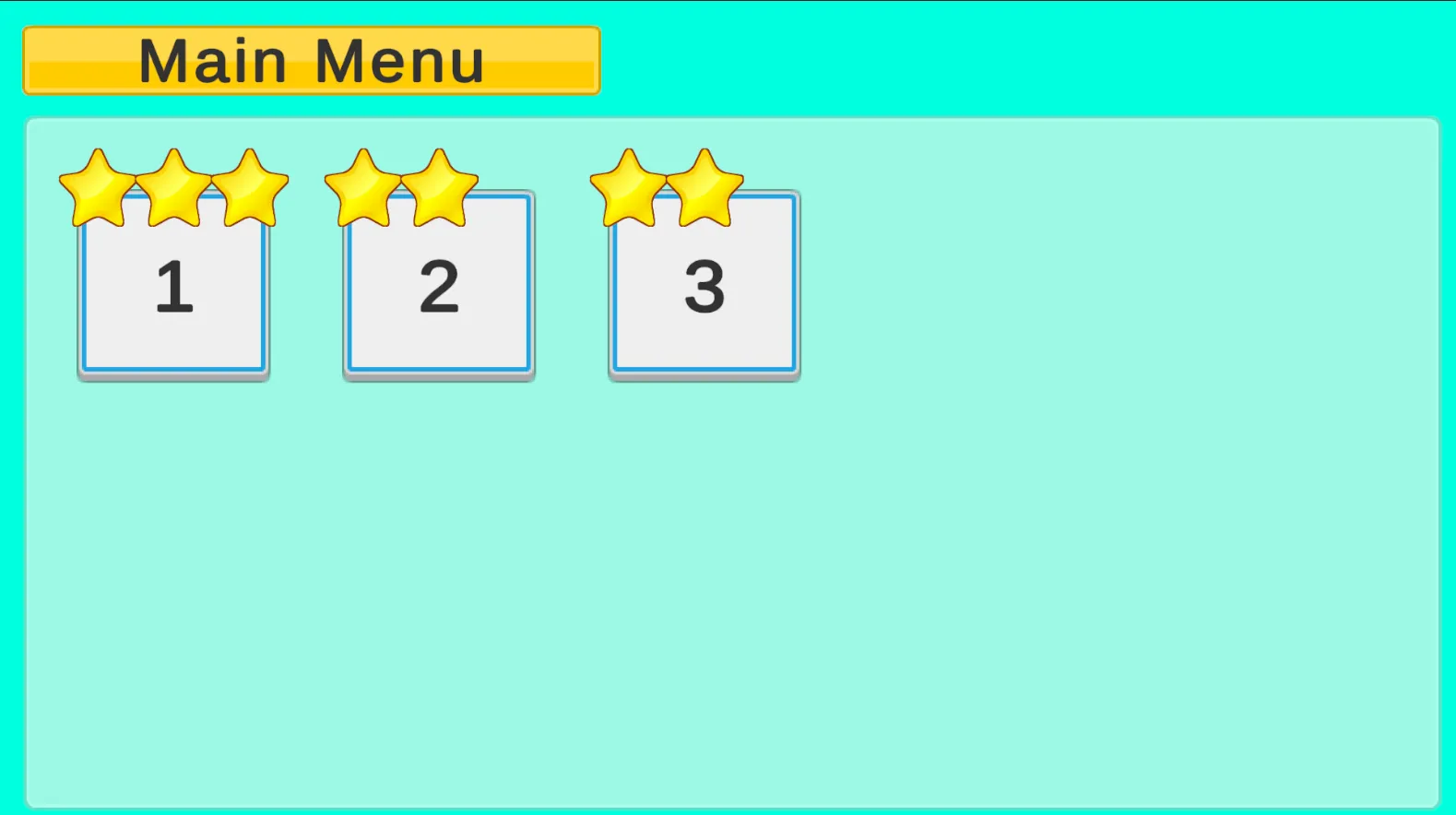
Level selection. A grid of levels showing the 0–3 stars earned on each, built with Unity’s Grid Layout Group so it adapts to different screen sizes.
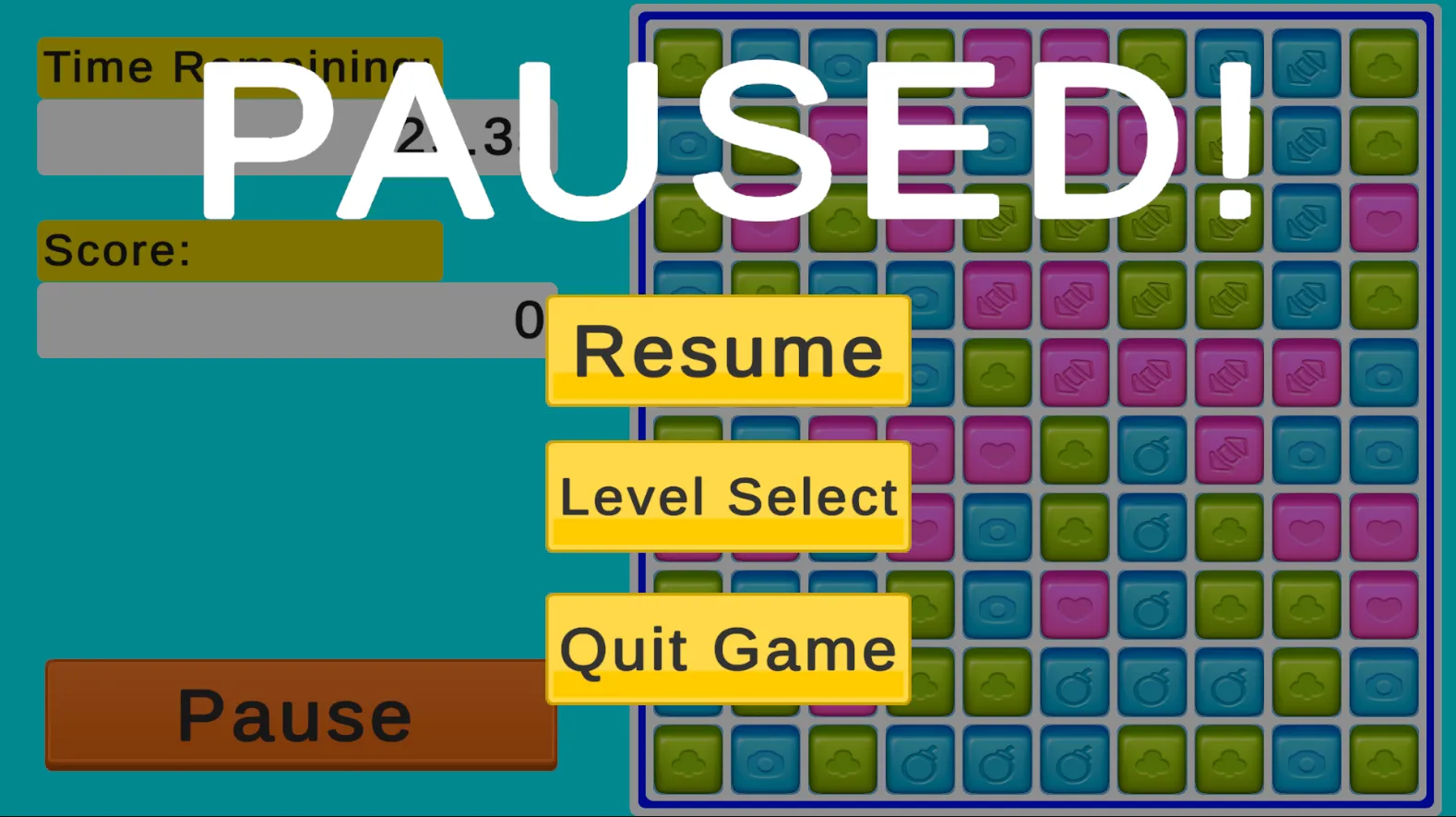
Pause menu. Opened with Esc or an on-screen button; pauses the game with Time.timeScale = 0 and offers Resume, Level Select and Quit over a semi-transparent overlay. The selected button scales up so it is always clear which option is active.
How it’s built
- C# with an object-oriented structure, keeping board logic, block types and UI in separate modules.
- Coroutines to sequence destruction, falling and refill animations.
- Event-driven UI so menus and buttons react to game state without polling.
Next steps
Combo mechanics and more power-ups, more levels with increasing difficulty, and object pooling to cut allocations during large chain reactions.